IPTV vs Traditional TV (Cable, Satellite & Aerial)
An honest comparison of IPTV and traditional TV: installation, devices, picture quality, reliability, flexibility and cost — and who each option suits best.
Quick answer
IPTV delivers TV over broadband with no dish or cable installation, works on TVs, sticks, phones and computers, includes on-demand content and is sold in flexible plans. Traditional cable, satellite and aerial TV does not depend on your internet connection, can have lower live latency and includes free-to-air channels. IPTV suits homes with stable broadband.
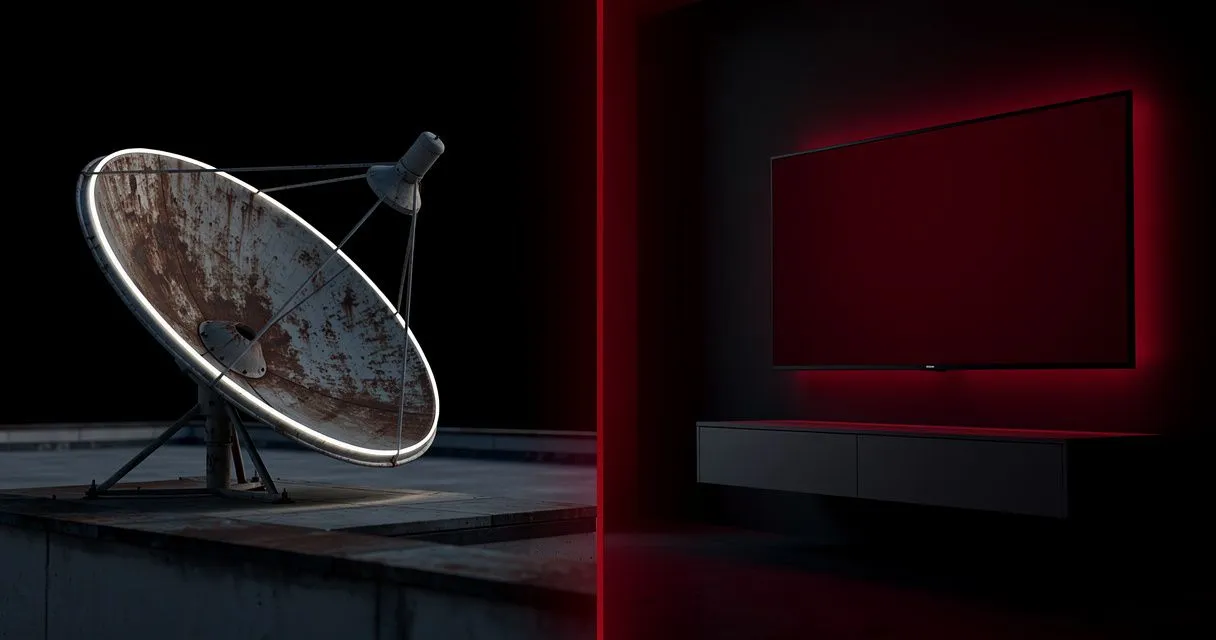
Traditional TV — aerial (terrestrial), satellite and cable — has served homes for decades. IPTV delivers TV over broadband instead. Neither is better in every situation; here's how they compare.
At a glance
| IPTV | Cable | Satellite | Aerial (terrestrial) | |
|---|---|---|---|---|
| Delivery | Broadband internet | Cable network | Dish | Roof/indoor aerial |
| Installation | None (app) | Technician / box | Dish installation | Aerial installation |
| Devices | TV, stick, phone, PC | TV + box | TV + receiver | TV |
| On-demand | Built in | Usually | Limited | Limited |
| Depends on broadband | Yes | Partly | No | No |
| Weather affects it | Rarely | Rarely | Heavy rain/snow can | Sometimes |
| Contract | Flexible plans | Often 12–24 months | Often contracts | Free-to-air |
Where IPTV wins
- No installation. If you have broadband, you're ready.
- Any screen. Watch on Smart TVs, streaming sticks, phones, tablets and computers.
- On-demand alongside live TV. Films and series sit next to the channel list.
- Flexibility. Plans for one month, several months or a year, rather than long contracts.
- Easy to move. Take it with you when you move home.
Where traditional TV wins
- Independence from broadband. A slow or congested connection doesn't affect satellite or aerial reception.
- Very low latency for live events. Broadcast signals can be a few seconds ahead of internet streams.
- Free-to-air channels. Terrestrial and some satellite channels need no subscription.
- Simplicity for some viewers. One remote, one box, no apps.
Picture quality
Both can deliver excellent quality. With IPTV, quality depends on your broadband: a stable 25 Mbps line handles 4K, while slower lines may get HD. Satellite quality depends on the channel's broadcast format, and reception can briefly drop in severe weather.
Reliability
- IPTV is as reliable as your home network and the service behind it. Ethernet and a good router help a lot — see internet speed requirements.
- Satellite and aerial are unaffected by internet problems but can be affected by weather, dish alignment or local reception.
Cost
Traditional pay-TV often bundles equipment, installation and long contracts. IPTV generally has lower upfront costs: you may only need a streaming device if your TV lacks a suitable app. Compare monthly costs carefully — see IPTV pricing explained.
Legal considerations
Both are legal technologies. What matters is that the service holds the rights to what it distributes, and that you meet local rules (such as the UK TV Licence for live TV). Read how to choose a legal IPTV provider.
Which should you choose?
- Choose IPTV if you have reliable broadband, want multiple screens and prefer flexible plans.
- Keep traditional TV if your broadband is slow or capped, or you mainly watch free-to-air channels.
- Use both if you want a backup for important live events.
- #comparison
- #iptv
- #cable
- #satellite